
EU vs US Kids Clothing Sizes: What's the Difference?
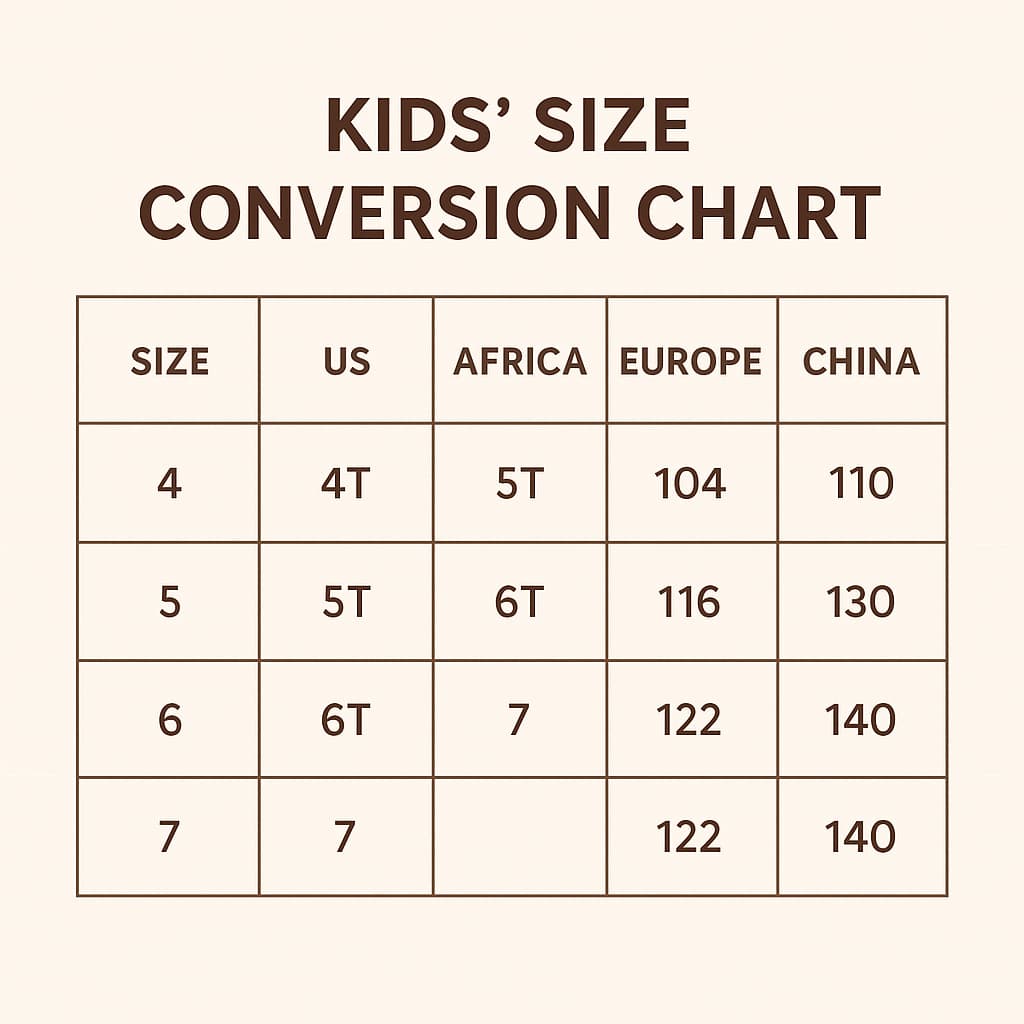
If you've ever ordered children's clothes from a European brand while living in the US — or the other way around — you already know the confusion. The size on the label looks completely unfamiliar, and guessing usually ends with something that doesn't fit.
We built LittleSizes partly because of this exact problem. Here's what you actually need to know.
The core difference is straightforward: EU sizes are based on your child's height in centimetres. A size "92" means the garment is designed for a child who is approximately 92 cm tall. US sizes use age labels like 2T, 3T, 4, 5, 6X — which are approximate and vary significantly between brands.
Why does height work better than age? Because two children who are both "3 years old" might need completely different sizes depending on how tall they are. EU sizing removes that guesswork by anchoring to an actual measurement.
Here's a quick reference:
- EU 92 = US 2T — approx. 86–92 cm, around 18 months to 2 years
- EU 98 = US 3T — approx. 92–98 cm, around 2–3 years
- EU 104 = US 4T — approx. 98–104 cm, around 3–4 years
- EU 110 = US 5 — approx. 104–110 cm, around 4–5 years
- EU 116 = US 6 — approx. 110–116 cm, around 5–6 years
- EU 122 = US 6X–7 — approx. 116–122 cm, around 6–7 years
- EU 128 = US 7–8 — approx. 122–128 cm, around 7–8 years
One thing we notice parents miss: European brands often cut their clothes slightly slimmer than US brands. So even when the height label matches, the fit through the chest or shoulders might feel more fitted than you expect. If your child is between sizes, it's usually worth sizing up when buying European.
The safest approach is always to measure your child's height first, then use that number — not the age label — to find the right size. Our converter on the homepage does this instantly across EU, US, and UK systems.